


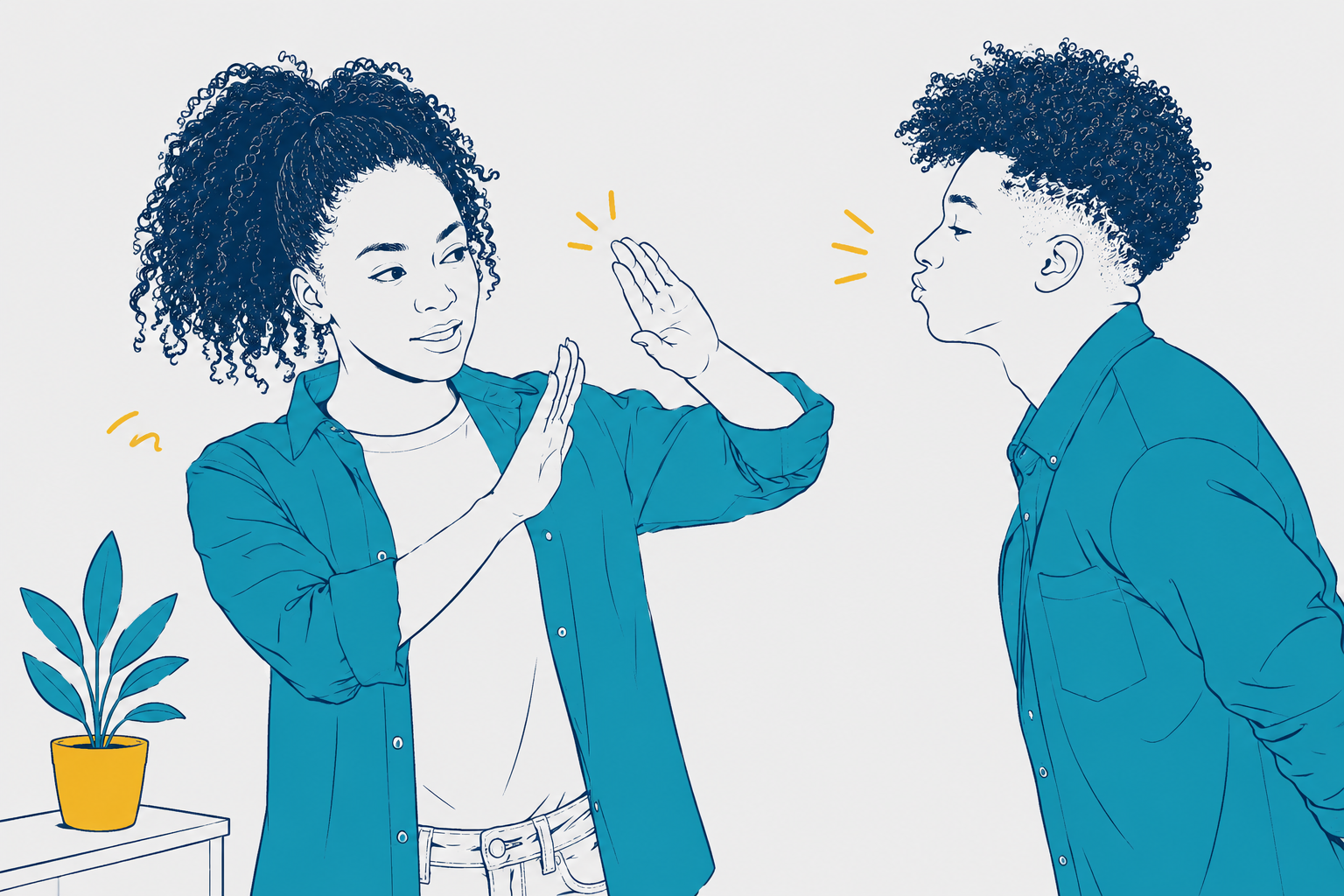
Healthy relationships involve sharing feelings, supporting each other, and building emotional closeness. At the same time, it’s important that both people maintain a sense of personal space and independence.
Learning how to set healthy boundaries in relationships and communicate your needs clearly is an important part of creating emotional balance and mutual respect.
This is where emotional boundaries come in because they help to protect your feelings, your wellbeing, and your sense of identity within a relationship.
Understanding emotional boundaries can help people build relationships that feel supportive, emotionally safe, and respectful — rather than overwhelming or emotionally draining over time.
What Are Emotional Boundaries?
Emotional boundaries are the limits people set around their feelings, responsibilities, and emotional energy.
They help define what you are comfortable sharing and what you need in order to feel emotionally safe.
For example, emotional boundaries may include:
- deciding how much personal information you share
- recognising that you are not responsible for someone else’s emotions
- protecting time and space when you feel overwhelmed
These boundaries allow relationships to feel balanced rather than emotionally exhausting.
Why Emotional Boundaries Matter
Without emotional boundaries, relationships can sometimes become intense or one-sided.
Someone may begin to feel responsible for managing their partner’s emotions or solving every problem. Over time, this can create pressure and make the relationship feel draining.
Healthy emotional boundaries help both people:
- maintain their own emotional wellbeing
- support each other without feeling overwhelmed
- communicate needs more clearly
This balance helps relationships grow in a healthy way.
Signs Emotional Boundaries May Be Missing
Sometimes it becomes clear that emotional boundaries need strengthening.
This might happen when someone feels:
- responsible for another person’s happiness
- pressured to respond to every emotional situation immediately
- overwhelmed by constant emotional conversations
- unable to take time for themselves without guilt
These situations can make relationships feel stressful instead of supportive.
Recognising Your Own Emotional Needs
Setting emotional boundaries often begins with understanding your own needs.
This might involve asking yourself questions such as:
- When do I feel emotionally drained?
- What situations make me feel overwhelmed?
- When do I need space to think or calm down?
Reflecting on these experiences can help you recognise when a boundary may be needed.
Communicating Emotional Boundaries
Once someone understands their emotional needs, the next step is communicating them respectfully to help the other person understand your perspective without feeling rejected.
For example, someone might say:
- “I care about this conversation, but I need some time to think about it.”
- “I want to support you, but I also need some time to focus on my own things.”
>> If communication is something that you struggle with, we have a guide that will help you to communicate better in your relationship.
Respecting Each Other’s Emotional Space
Healthy relationships involve respecting each other’s emotional boundaries.
This means recognising that both people need:
- time to process feelings
- personal space during stressful moments
- independence outside the relationship
When emotional boundaries are respected, relationships tend to feel calmer, more supportive, and less overwhelming.
Emotional Boundaries Help Relationships Stay Healthy
Setting emotional boundaries does not mean someone cares less about the relationship. Instead, it helps ensure that both people can support each other without losing their sense of independence or wellbeing.
Healthy emotional boundaries allow relationships to grow through trust, communication, and mutual respect, creating a stronger and more balanced connection over time.