
This article is part of the Skincare & Grooming hub. Explore related guides on acne care, skin types, and confidence-building habits. All skincare and grooming content on TheYouthToolbox is designed to support healthy habits, build confidence, and provide clear, age-appropriate guidance for teens and young adults.

Acne is one of the most common — and most misunderstood — parts of being a teenager. It can appear suddenly, change week to week, and feel completely out of your control. One day your skin is calm, the next you’re dealing with breakouts before school, a big event, or just when you were starting to feel confident.
The good news? Acne is normal, manageable, and temporary for most people. Clear skin isn’t about perfection, expensive products, or doing everything “right.” It’s about understanding what’s happening in your skin and building habits that support it over time.
This guide covers everything teens need to know about acne, breakouts, and clear skin habits — without shame, pressure, or unrealistic promises.
What Acne Actually Is (And What It Isn’t)
If you’re dealing with breakouts, it’s easy to feel like something has gone wrong with your skin — or that you’re doing something wrong. In reality, acne is a very common skin condition, especially during your teenage years, and it follows a process that happens beneath the surface long before you see a spot.
Acne develops when your pores become blocked with a mix of oil (sebum), dead skin cells, and sometimes bacteria. Your skin naturally produces oil to protect itself, and it regularly sheds old skin cells. But when these processes don’t stay balanced — which often happens during puberty — pores can become clogged. This can lead to different types of spots, including whiteheads, blackheads, and inflamed or painful breakouts.
What makes acne confusing is that it doesn’t always show up immediately. A spot you notice today may have been forming under your skin for days or even weeks. That’s why breakouts can feel sudden or unpredictable, even when you haven’t changed anything in your routine. Understanding this can help you avoid reacting too quickly or trying to “fix” your skin overnight.
It’s also important to be clear about what acne isn’t. Acne is not caused by poor hygiene, being lazy, or not taking care of yourself properly. In fact, trying to scrub your skin too much or using harsh products can irritate your skin and make breakouts worse. Acne is more strongly influenced by factors like hormones, genetics, and how your skin naturally produces oil — many of which are outside your control.
This is why comparing your skin to someone else’s often isn’t helpful. Two people can follow similar routines and still have very different skin experiences.
When you see acne as something your skin is going through — rather than something you’ve caused — it becomes much easier to respond with patience and care instead of frustration.
Why Acne Is So Common During the Teenage Years
If your skin started changing during your teen years, that’s not a coincidence. Acne becomes more common at this stage because your body — including your skin — is going through a period of rapid change.
During puberty, your body produces higher levels of hormones called androgens. These hormones signal your oil glands to become more active, which means your skin starts producing more oil than it did before. While oil is important for protecting your skin, too much of it can mix with dead skin cells and block your pores, increasing the chances of breakouts.
At the same time, your skin is still adjusting to these changes. Oil production can fluctuate, pores may clog more easily, and your skin can react differently from one week to the next. This is why acne during the teenage years often feels unpredictable — your skin hasn’t settled into a consistent pattern yet.
Alongside hormones, there are other everyday factors that can make acne more noticeable:
- natural hormonal fluctuations
- growth and physical development
- stress from school, exams, or social pressure
- lack of sleep
- sweating and friction from sports or clothing
- trying new skincare or makeup products
None of these factors cause acne on their own, but they can influence how your skin responds and how often breakouts appear.
The key takeaway here is that acne during your teenage years is extremely common and largely driven by changes happening inside your body. It’s not something you can completely control, and it doesn’t mean you’re doing anything wrong. If you want a clearer understanding of how these factors combine, it can help to explore Why You’re Getting Acne (And What Actually Helps).
Because your skin is still adjusting, quick fixes and constant changes tend to make things worse. A more helpful approach is focusing on simple, consistent habits that support your skin over time.
Start Here:
- Why You’re Getting Acne (And What Actually Helps)
- Why Acne Is So Common in Teenagers
- Why Some People Get More Acne Than Others
More Helpful Guides:
Different Types of Acne Teens Experience
Not all acne looks the same, and it doesn’t always behave the same way either. If your skin seems to change from small bumps to red spots or deeper breakouts, that’s because acne can show up in different forms — often at the same time.
At a basic level, all acne starts with blocked pores. But how your skin reacts to those blocked pores can vary depending on things like oil production, hormones, and sensitivity. Some breakouts stay small and surface-level, while others become more inflamed or take longer to heal. This is why understanding the type of acne you’re dealing with can help you respond more gently, rather than treating everything the same way.
Common types of acne in teens include:
- Hormonal acne – often appears around the jawline, chin, or lower cheeks and can come and go in patterns
- Clogged-pore acne (blackheads and whiteheads) – caused by excess oil and dead skin cells building up in pores
- Inflammatory acne – red, swollen, or sore spots that feel more noticeable and may take longer to settle
- Body acne – breakouts on the chest, back, shoulders, or arms, often linked to sweat and oil buildup
- Friction-related acne – caused by repeated rubbing or pressure from things like helmets, backpacks, or tight clothing
Most people don’t fit into just one category. You might have blackheads on your nose, inflamed spots on your cheeks, and occasional breakouts on your shoulders — all at the same time. That’s completely normal and reflects how many different factors can affect your skin at once.
The reason this matters is that it can stop you from overreacting. For example, using strong treatments on mild clogged pores can irritate your skin, while ignoring habits like friction or sweat can make certain breakouts keep returning. A more balanced approach is to look at patterns over time and respond in a way that supports your skin overall.
If you’re unsure why your breakouts look or behave a certain way, it can help to explore the underlying causes in Why You’re Getting Acne (And What Actually Helps), or focus on building a routine that works across different types in Best Skincare Routine for Acne-Prone Skin (Simple & Gentle).
You don’t need to perfectly label every spot — just understanding that acne can show up in different ways can help you treat your skin with more patience and less pressure.
Start Here:
- Acne & Breakouts: How to Get Clearer Skin Without Overdoing It
- Why Acne Gets Worse Before It Gets Better
- How Long Breakouts Usually Last
More Helpful Guides:
- Why Acne Flare-Ups Happen Suddenly
- How Stress Triggers Breakouts
- What Actually Helps Acne Heal Faster
The Truth About Skincare and Acne
When your skin breaks out, it’s natural to want to fix it quickly. You might feel like you need stronger products, more steps, or constant changes to your routine. But in many cases, this approach can make acne harder to manage rather than easier.
Acne-prone skin is often already sensitive and unbalanced. Using harsh cleansers, scrubbing your skin, or layering multiple treatments can irritate the surface and disrupt your skin barrier. When that happens, your skin may respond by producing more oil and becoming more inflamed — which can lead to more breakouts. This is why doing more doesn’t always lead to better results.
Another common pattern is switching products too quickly. If you don’t see immediate improvement, it’s easy to assume something isn’t working. But your skin needs time to respond, and constant changes can prevent it from settling. Over time, this can create a cycle of irritation, breakouts, and frustration.
Clearer skin habits tend to focus on gentle, consistent care rather than intensity. The goal isn’t to “fight” your skin, but to support it so it can regulate itself more effectively.
The Basics of an Acne-Friendly Routine
A simple routine is usually more effective — and easier to stick to — than a complicated one. Most acne-friendly routines are built around a few key steps:
- Cleanse gently, morning and night
This helps remove excess oil, sweat, and buildup without stripping your skin. - Moisturise (even if your skin feels oily)
Hydration supports your skin barrier and can help prevent your skin from overproducing oil. - Use targeted treatments sparingly
Applying too many treatments at once can irritate your skin. It’s often more effective to keep things minimal and consistent. - Protect your skin barrier
A healthy skin barrier helps your skin stay balanced, reduces sensitivity, and supports healing.
Over-treating acne can lead to:
- increased oil production
- irritation and redness
- breakouts that take longer to settle
If you’re unsure how to structure a routine that stays simple but still works, it can help to follow a clear guide like Best Skincare Routine for Acne-Prone Skin (Simple & Gentle).
The most important takeaway is that skincare doesn’t need to be complicated to be effective. In many cases, your skin responds better when you simplify, stay consistent, and give it time to adjust.
Start Here:
- Best Skincare Routine for Acne-Prone Skin
- How to Tell If Your Skin Is Acne-Prone
- Why Gentle Skincare Works Better for Acne
More Helpful Guides:
- How Long Acne Skincare Takes to Work
- Why Over Washing Can Make Acne Worse
- How to Build an Acne Routine Without Too Many Products
How Lifestyle Habits Affect Your Skin
Skincare plays an important role in managing acne, but what you do every day outside of your routine can have just as much impact. Small habits — like how you sleep, handle stress, or take care of your skin after exercise — can influence how often you break out and how quickly your skin recovers.
These factors don’t usually cause acne on their own. But they can affect oil production, inflammation, and how your skin heals, which can make breakouts more noticeable or harder to manage.
Sleep and Acne
Sleep is when your body — and your skin — has time to repair itself.
When you don’t get enough sleep, your body produces more stress hormones. This can increase inflammation and sometimes lead to more frequent or more noticeable breakouts. Lack of sleep can also affect how well your skin heals, meaning spots may take longer to settle.
Keeping a consistent sleep routine doesn’t guarantee clear skin, but it can help your skin stay more balanced over time.
Stress and Breakouts
Stress is a common part of life, especially during your teenage years. School pressure, social situations, and even worrying about your skin can all build up.
Stress doesn’t directly cause acne, but it can trigger flare-ups by:
- increasing certain hormones
- making your skin more reactive
- affecting habits like sleep or skincare consistency
You might notice your skin changes during busy or stressful periods. Understanding this connection can help you respond more calmly, rather than trying to change everything in your routine at once. If this is something you experience often, it can help to explore how stress triggers breakouts in more detail.
Exercise and “Gym Acne”
Exercise is generally good for your overall health and can support your skin. But certain habits around exercise can sometimes lead to breakouts.
Breakouts can happen when:
- sweat sits on your skin for long periods
- tight clothing or equipment causes repeated friction
- bacteria builds up on items like helmets, pads, or gym equipment
This doesn’t mean you need to avoid exercise. It just means a few small habits can make a difference:
- showering soon after workouts
- changing out of sweaty clothes
- keeping equipment and anything that touches your skin clean
What This Means for Your Skin
Lifestyle habits don’t need to be perfect to support your skin. Small, consistent changes are often enough to reduce unnecessary triggers.
Rather than trying to control everything, it’s more helpful to:
- notice patterns in your routine
- make gradual improvements
- avoid overreacting to occasional breakouts
Your skin responds to your overall routine — not just your skincare products.
With the right balance, these habits can support your skin without adding extra pressure.
Diet, Hydration, and Acne: What Actually Matters
Food and hydration are often blamed for acne, which can make it feel like you need to control everything you eat to improve your skin. In reality, the relationship is more balanced. There isn’t a single “acne diet” that works for everyone, and for most teens, breakouts are influenced more by hormones and skin behaviour than by specific foods.
What you eat and drink can still affect your skin indirectly. Hydration supports normal skin function, while balanced eating patterns can influence energy levels, hormones, and inflammation. But these effects tend to be gradual and vary from person to person, rather than causing immediate or dramatic changes in your skin.
Instead of focusing on what to cut out, it’s more helpful to focus on habits that support your overall health:
- eating regular, balanced meals
- staying hydrated throughout the day
- limiting ultra-processed foods where possible
- noticing if certain foods consistently seem to affect your skin
These habits don’t need to be perfect to be effective. Small, consistent choices tend to support your skin more than strict rules.
It’s also important to be cautious about extreme advice. Cutting out entire food groups or following restrictive diets can add stress and may not improve acne in a meaningful way. For many people, this approach becomes difficult to maintain and can shift the focus away from what actually helps — like consistent skincare and realistic daily habits.
If you’re unsure how diet fits into your acne, it can help to explore a clearer breakdown in Does Diet Really Affect Acne? (What Actually Matters). This can give you a more balanced understanding without unnecessary pressure.
The most helpful approach is to think of diet and hydration as part of a bigger picture. Clear skin habits are built on balance and consistency — not restriction or perfection.
Makeup, Hair Products & Everyday Triggers
If your skin keeps breaking out in the same areas, it’s not always your skincare routine causing it. Everyday products and habits — especially things that come into contact with your face — can play a role in triggering or maintaining breakouts without you realising.
Your skin is constantly exposed to oils, residue, and bacteria from the things around you. Makeup, hair products, and even items like your phone or pillowcase can transfer onto your skin throughout the day. When this buildup sits on the surface, it can mix with oil and dead skin cells, making pores more likely to clog.
Some common triggers include:
- heavier makeup or not removing it fully at the end of the day
- makeup brushes or sponges that aren’t cleaned regularly
- hair products (like gels or oils) transferring onto your forehead or cheeks
- pillowcases and phone screens collecting oil and bacteria over time
These factors don’t always cause acne on their own, but they can make breakouts more frequent or harder to clear — especially if your skin is already acne-prone.
The helpful part is that these are usually small, manageable changes. You don’t need to stop using makeup or hair products completely. Instead, focus on simple habits like:
- removing makeup gently and thoroughly
- cleaning brushes and tools regularly
- keeping hair away from your face when possible
- being mindful of what touches your skin throughout the day
If you notice breakouts appearing in specific areas — like your forehead or along your cheeks — it can be useful to look at what might be coming into contact with that area. Understanding these patterns can help you reduce unnecessary triggers without overcomplicating your routine.
Your skin doesn’t need perfection — just a bit more awareness of the small things that can add up over time.
Why Popping Spots Makes Things Worse
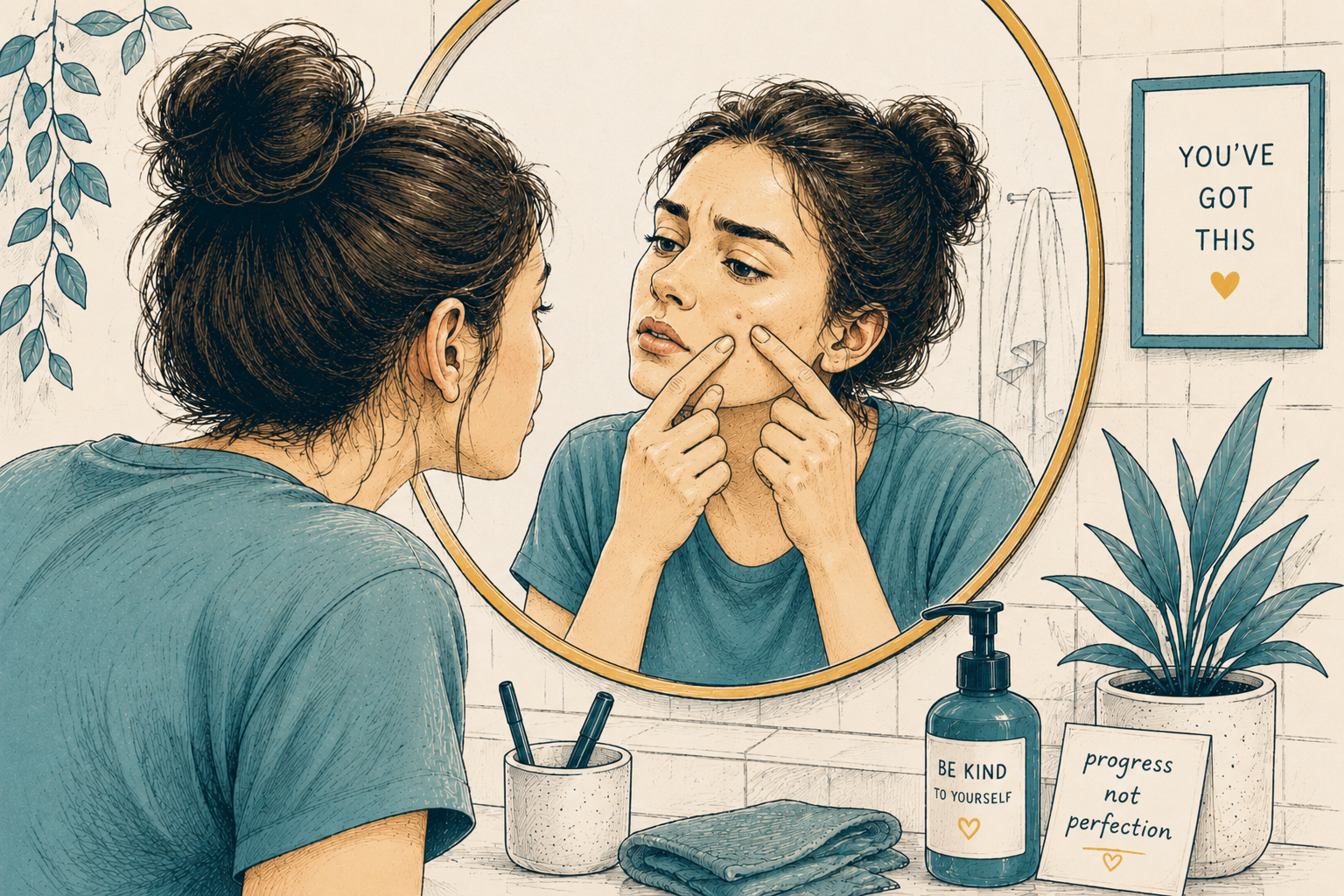
When you notice a spot, it’s completely natural to want it gone as quickly as possible. Popping or squeezing can feel like the fastest way to deal with it — especially if it looks ready to come out. But what feels helpful in the moment often makes the situation worse underneath the surface.
When you squeeze a spot, you’re not just removing what you can see. You can also push oil, bacteria, and debris deeper into the pore. This can increase inflammation and make the spot larger, redder, and more painful than it was before. It also disrupts your skin’s natural healing process, meaning the breakout can take longer to settle.
Popping spots can also increase the risk of longer-term marks. When the skin is damaged, it’s more likely to leave behind:
- red or dark marks that take time to fade
- uneven texture
- in some cases, permanent scarring
This is especially true if the same area is picked repeatedly or if the spot is deeper under the skin.
If you’re finding it hard to leave spots alone, you’re not the only one. It’s often a habit linked to stress, frustration, or simply wanting to feel in control. Understanding this can make it easier to approach the habit more realistically. You might find it helpful to explore how to break the skin picking habit or understand why picking your skin makes acne worse in more detail.
The most effective approach is to focus on helping your skin heal rather than trying to force spots away. This usually means keeping your routine simple, avoiding unnecessary touching, and giving your skin time to recover.
It’s not about perfect self-control — it’s about supporting your skin in a way that helps it improve over time.
Start Here:
- How to Stop Picking at Your Skin
- Why Picking Your Skin Makes Acne Worse
- Why You Keep Picking Your Skin
More Helpful Guides:
- How Stress and Anxiety Can Lead to Skin Picking
- What Happens to Your Skin After Picking at Acne
- How to Break the Skin Picking Habit
How Long Acne Takes to Improve (Realistic Timelines)
One of the hardest parts of dealing with acne is how long it can take to improve. You might start a new routine expecting quick results, and when nothing changes after a few days — or even a couple of weeks — it can feel like it’s not working.
In most cases, acne takes 6–8 weeks to show noticeable improvement. This is because your skin works in cycles. New skin cells take time to form and move to the surface, and breakouts you see today may have started developing weeks earlier. Even when a routine is working, those changes aren’t always visible straight away.
This delay is one of the main reasons people feel stuck. It’s easy to assume something isn’t helping and switch products too quickly. But constantly changing your routine can interrupt progress, irritate your skin, and make it harder to see what actually works.
Clearer skin is usually built through:
- patience
- consistency
- gentle, supportive care
Rather than reacting to every breakout, the goal is to give your skin time to respond to a stable routine.
It’s also important to know that progress isn’t always a straight line. You might see improvement, then have a flare-up, then improve again. This doesn’t mean you’ve gone backwards — it’s often just part of how your skin adjusts over time. If you’ve noticed your skin getting worse before improving, it can help to understand why acne gets worse before it gets better.
If you’ve been consistent for several weeks and aren’t seeing any improvement — or if your acne is painful or affecting your confidence — it may be worth speaking to a GP or dermatologist. Getting support is a normal and helpful step.
The most important thing to remember is that acne improvement takes time. Staying consistent, even when results feel slow, often makes the biggest difference in the long run.
Acne, Confidence & Mental Health
Acne doesn’t just affect how your skin looks — it can affect how you feel about yourself day to day. It’s common to become more aware of your appearance, especially when breakouts feel noticeable or unpredictable.
For many teens, acne can lead to:
- lower confidence in social situations
- avoiding photos or events
- feeling self-conscious about being seen up close
- comparing your skin to others
These reactions are understandable. When your appearance changes, it’s natural to think about how others might see you — even if those thoughts don’t always reflect reality.
Acne can also affect your mood over time. You might find yourself overthinking small changes in your skin, checking mirrors more often, or feeling frustrated when breakouts don’t improve quickly. This can create a cycle where your skin affects your confidence, and that stress can make breakouts feel even more noticeable.
It’s important to recognise that these feelings are valid — but they don’t define your worth. Acne is a common experience, and it doesn’t reflect how well you take care of yourself or who you are as a person. If you often compare your skin to others, it can help to understand why some people get more acne than others, as differences in skin are often down to factors you can’t control.
If acne is starting to affect your mood, confidence, or how you live your daily life, that matters. You don’t have to ignore it or deal with it on your own. Support can come in different forms — whether that’s learning more about your skin, talking to someone you trust, or speaking to a GP or professional if things feel overwhelming.
Looking after your skin is important, but so is looking after how you feel about yourself. Both deserve attention and care.
When to Get Professional Help
It’s common to try managing acne on your own at first. But there are times when getting extra support can make things easier — and more effective. Seeing a GP or dermatologist isn’t a sign that you’ve failed; it’s a practical step when your skin needs more targeted help.
Acne can vary a lot in how it behaves. Mild breakouts often respond to simple routines, but more persistent or inflamed acne may need a different approach. A professional can help you understand what’s happening with your skin and suggest treatments that are suited to your situation, rather than relying on trial and error.
It may be worth speaking to a GP or dermatologist if:
- your acne is painful, deep, or inflamed
- breakouts are leaving marks or scars
- you’ve been consistent with a routine but aren’t seeing improvement
- your skin is affecting your confidence or mood
Getting support early can help reduce the risk of longer-term skin changes, such as scarring or ongoing inflammation. It can also take away some of the pressure of trying to figure everything out on your own.
If you’re unsure whether your acne is at that point, it can help to understand how long acne takes to improve and what’s considered a normal timeline. This can give you a clearer idea of when it might be time to get extra support.
The most important thing to remember is that you don’t have to wait until things feel severe. If your skin — or how you feel about it — is affecting your day-to-day life, it’s reasonable to ask for help.
Clear Skin Habits Are About Long-Term Support
Clear skin habits aren’t about chasing perfection. They’re about:
- understanding your skin
- treating it with patience
- building routines you can stick to
- letting progress happen over time
Acne doesn’t define you — and it doesn’t last forever for most people.
This hub exists to help you feel informed, supported, and confident, no matter what stage your skin is in.
Browse by Article


More about acne, breakouts & clear skin habits
Frequently Asked Questions
Why do I get acne as a teenager?
Acne is very common during the teenage years because your body produces more hormones, especially androgens. These hormones increase oil (sebum) production, which can clog pores and lead to spots, blackheads, and whiteheads. Genetics, stress, skincare habits, and lifestyle factors can also play a role.
Is acne caused by poor hygiene?
No. Acne is not caused by being dirty or not washing your face enough. In fact, over-washing or using harsh products can make acne worse by irritating your skin and triggering more oil production. Gentle, consistent care works better than aggressive cleansing.
How often should I wash my face if I have acne?
For most teens, washing your face twice a day — morning and evening — is enough. Use a gentle, non-comedogenic cleanser and avoid scrubbing. Washing more often won’t clear acne faster and can actually irritate your skin.
Does food really cause teen acne?
Diet affects everyone differently. Some people notice breakouts linked to high-sugar foods, ultra-processed snacks, or excessive dairy, while others don’t. Instead of cutting out entire food groups, focus on balance: regular meals, plenty of water, fruits, vegetables, and enough protein.
Can stress make acne worse?
Yes. Stress can increase hormone levels that trigger oil production and inflammation, which can lead to breakouts. School pressure, exams, social stress, and lack of sleep can all affect your skin. Managing stress won’t “cure” acne, but it can help reduce flare-ups.
Should I pop or squeeze spots?
It’s best not to. Popping spots can push bacteria deeper into the skin, slow healing, and increase the risk of scarring or dark marks. If a spot is painful or persistent, gentle treatments or professional advice are safer options.
How long does it take for acne treatments to work?
Most acne treatments take 6–8 weeks to show real improvement. It’s normal for skin to look the same — or even slightly worse — at first. Consistency is key, and switching products too often can slow progress.
Can makeup make acne worse?
Makeup isn’t automatically bad for acne, but heavy or pore-clogging products can contribute to breakouts. Look for products labelled non-comedogenic, remove makeup before bed, and regularly clean brushes and sponges.